01
Narrow, fragile airways
The diameter of an infant's bronchi and bronchioles is far smaller than an adult's. A small amount of mucus can therefore cause significant obstruction.
A gentle, scientific and deeply respectful approach to the infant. The Guy Postiaux method has transformed paediatric respiratory physiotherapy by replacing older techniques — clapping, postural drainage — with slow, passive expiratory techniques (ELPr) validated by scientific research. This is the method Stéphane Otto teaches to physiotherapists around the world.

The respiratory system of a newborn or young child is not a scaled-down version of an adult's. This is one of the fundamental insights of Guy Postiaux's work: the infant's ventilatory mechanics, airway geometry, respiratory muscle maturity and ability to cough all differ profoundly from those of an adult. Yet for decades, paediatric respiratory physiotherapy applied techniques designed for adults to babies: postural drainage, chest percussion (clapping), forced expirations. The results were limited at best and harmful at worst.
The new paradigm proposed by Guy Postiaux, and now taught by Stéphane Otto around the world, rests on a different logic: adapting the technique to the infant's real physiology. This means favouring slow expiratory techniques (ELPr — Prolonged Slow Expiration), passive, modulated manoeuvres synchronised with the baby's spontaneous breathing, always guided by lung auscultation. These gentle techniques respect the child and the family, and give the physiotherapist observable, measurable results.
This page offers a complete overview of infant respiratory physiotherapy: the anatomical specifics that justify it, the modern techniques that make it up, how a session unfolds, the indications and contraindications, the scientific evidence behind it, and the courses taught by Stéphane Otto to pass this method on to practising physiotherapists. Useful reading for parents with questions as well as for professionals wishing to learn more.
Understanding why infant respiratory physiotherapy cannot rely on the same techniques as for adults requires grasping a few essential features of the baby's anatomy and physiology.
The diameter of an infant's bronchi and bronchioles is far smaller than an adult's. A small amount of mucus can therefore cause significant obstruction.
A baby's chest is extremely flexible: the ribs are soft and the sternum mobile. Strong or percussive techniques are more likely to deform the rib cage than to drain secretions.
Infants under 3 months breathe almost exclusively through the nose. Nasal congestion alone can cause respiratory distress — hence the importance of nasal washing, the essential first step.
The expulsive force of a baby's cough is limited. This justifies the use of suitable airway clearance aids, including Provoked Cough (TP) according to Guy Postiaux.
Infants breathe mainly with the diaphragm. Every technique must take this into account, especially the direction and pressure applied to the abdomen during an expiratory manoeuvre.
GOR is very common in infants. Older techniques (postural drainage, percussion) encouraged it; modern techniques (ELPr) respect it.
The Postiaux method is above all a gesture — a precise touch, attentive listening, a respectful presence. Here are some images of this practice, as passed on by Stéphane Otto around the world.
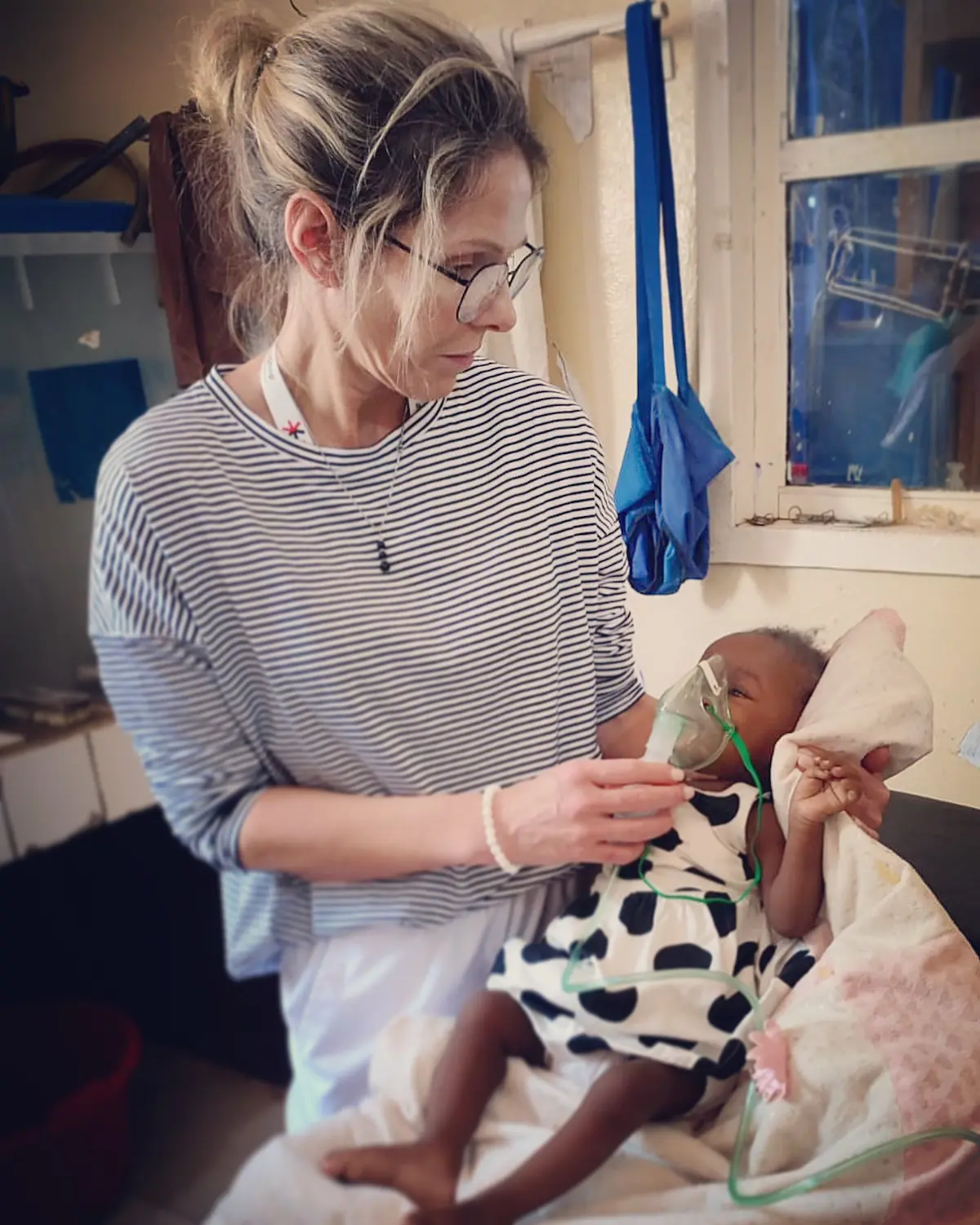
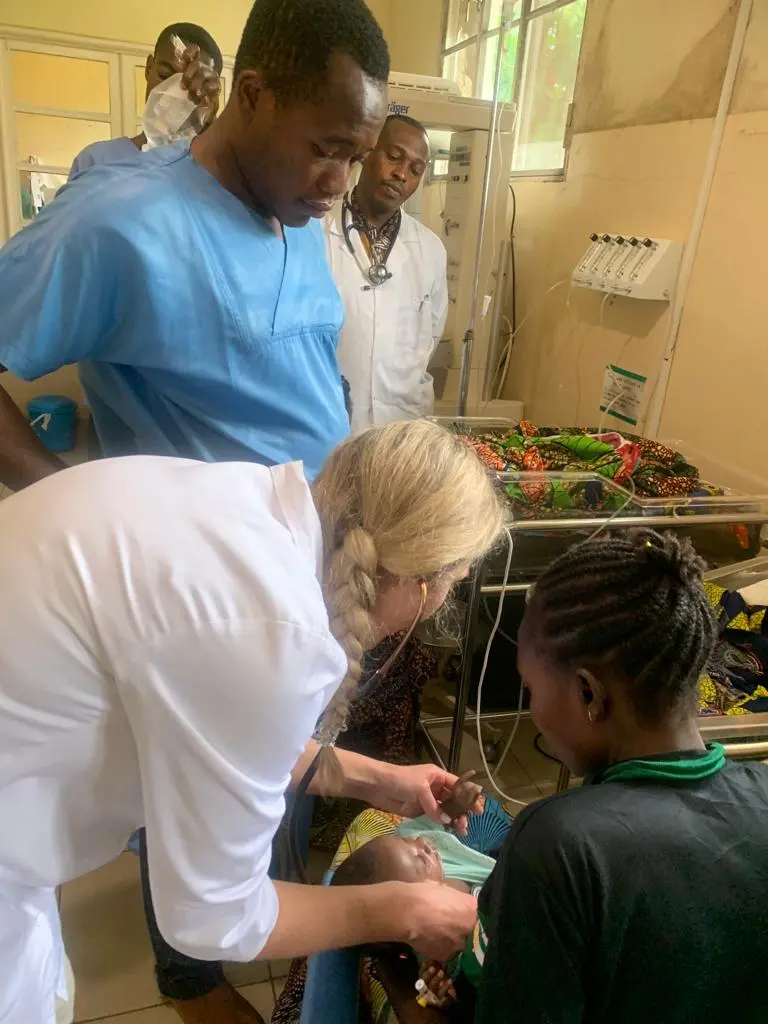
The Postiaux method has profoundly renewed the paediatric physiotherapist's toolkit. Here are the main techniques used with babies — all gentle, slow, passive, modulated and guided by lung auscultation.
A passive, slow manoeuvre performed with gentle thoraco-abdominal pressure by the physiotherapist, synchronised with the baby's spontaneous expiration. It prolongs expiration from functional residual capacity towards residual volume, moving secretions from the distal to the proximal airways. Validated by oesophageal pressure measurement and published in Annales de Kinésithérapie.
A technique for the controlled increase of expiratory flow, adapted to infants in a slow, modulated form. It complements ELPr by helping secretions move towards the proximal airways. The rapid or forced AFE of older techniques has been replaced by this gentle, adapted version.
A baby cannot cough on demand. Provoked Cough involves triggering a cough through precisely calibrated laryngeal stimulation. It has been studied and validated in comparison with other expiratory techniques (ELPr, AFE), notably in a prospective study published by Postiaux's team on 19 hospitalised infants (2006).
A manual technique of gentle chest pressure, modulated and synchronised with the infant's spontaneous expiration. It follows the logic of the new paradigm: no percussion, no violent vibration, but continuous, physiological manual action.
Since infants breathe through the nose, nasal clearance is often the first step — and sometimes the only one needed. Saline solution, lying on the back or side, in-line technique. The physiotherapist teaches parents to repeat this at home.
Before and during each session, lung auscultation is the central act. It identifies the nature of the sounds (wheezes, rhonchi, crackles) and their location, and guides the choice of technique in real time. It is the cornerstone of the Postiaux method.
Research by Guy Postiaux and several international teams has shown that certain older techniques — long taught out of habit — are ineffective and have potentially harmful side effects in infants. These techniques no longer form part of practice under the new paradigm.
Tilting the child into different positions to make secretions "fall" by gravity. Shown to be ineffective in the vast majority of cases, and associated with an increased risk of gastro-oesophageal reflux in infants.
Rapid tapping on the chest with a cupped hand. No proven benefit on bronchial clearance; documented adverse effects: regurgitation, agitation, transient desaturation, rib fractures in extreme cases.
Manual or mechanical vibrations applied to the chest. Like clapping, these techniques have no solid scientific validation in infants and can cause discomfort and stress.
Rapid, strong chest pressures. Unsuited to infant ventilatory mechanics, they can worsen obstruction through dynamic collapse of the distal airways. Replaced by slow expirations (ELPr).
In November 2019, France's Haute Autorité de Santé published recommendations stating that airway clearance respiratory physiotherapy is no longer recommended as routine in the management of acute bronchiolitis in otherwise healthy infants. This update precisely reflects the conclusions of Postiaux's work: abandon conventional, unvalidated techniques. It does not rule out the potential value of modern techniques (ELPr) in certain specific clinical contexts, on medical indication.
A paediatric respiratory physiotherapy session using the Postiaux method lasts between 15 and 25 minutes. It follows a precise logic, from assessment to passing information on to parents.
The physiotherapist reviews the child's clinical history (medical prescription, past history, symptoms, feeding, sleep) and observes the baby: colour, breathing rate, any signs of difficulty, behaviour. This initial observation is already a clinical examination.
Using a suitable stethoscope, the physiotherapist listens to the respiratory sounds: presence or absence of adventitious sounds (wheezes, rhonchi, crackles), their location and how they change with breathing. This skill, taught in depth in Stéphane Otto's courses, is the cornerstone of the therapeutic decision.
Based on the assessment, the physiotherapist decides: is a session needed, or simply monitoring and support? If intervention is justified, which techniques should be chosen? The Postiaux method explicitly rejects systematic protocols: every baby has an assessment, and every assessment determines the treatment.
The first technical step with an infant: clearing the upper airways. Saline solution, suitable position, in-line technique. The physiotherapist guides parents and explains the gesture so that they can repeat it at home.
ELPr, sometimes combined with modulated slow AFE, is applied while respecting the baby's comfort. These are passive manoeuvres: no percussion, no violent vibration, no effort imposed on the child. The physiotherapist watches for signs of tolerance — a baby who becomes agitated, cries a lot or desaturates requires a pause.
If secretions have moved into the proximal airways and the child does not cough spontaneously, a Provoked Cough can be triggered to complete clearance. This technique remains precisely calibrated and is not systematic.
A new auscultation assesses the immediate effect of the session: have the adventitious sounds decreased? Has ventilation improved? This is the objective check that the Postiaux method has established as standard.
Hydration, smaller and more frequent feeds, sleeping position, nasal washing, warning signs to watch for. The session always ends with time for discussion and information. The paediatric respiratory physiotherapist is also a health educator.
The Postiaux method insists on the need for precise indications. Paediatric respiratory physiotherapy is never systematic: it always requires prior clinical assessment and a medical prescription.
This list is indicative and non-exhaustive. Any indication or contraindication must be validated by a doctor. If in doubt or if signs of worsening appear, contact a healthcare professional or the emergency services immediately.
Beyond the physiotherapy session, parents play a central role in the infant's respiratory comfort. Here are some simple, essential actions, often taught by physiotherapists trained in the Postiaux method.
With saline solution, several times a day, especially before feeds and bedtime. The essential action for a baby with a cold.
Offer drinks more often, in small amounts. Good hydration thins secretions and makes them easier to clear.
In countries where this is recommended, slightly raise the head of the cot (on paediatric advice). Sleeping on the back remains the rule for preventing sudden infant death.
Exposure to second-hand smoke significantly worsens infants' respiratory symptoms. Air rooms regularly and keep the home smoke-free.
Refusing to drink, breathing difficulty, excessive drowsiness, abnormal colour (cyanosis), extreme agitation — all signs requiring immediate medical attention.
The Postiaux method has always been rooted in Evidence Based Medicine. Here are some major scientific publications that mark the history of modern paediatric respiratory physiotherapy.
A pioneering study comparing ELPr, FET and Provoked Cough in infants by measuring oesophageal pressures — physiological proof of the slow, passive nature of the technique.
A longitudinal study showing a significant improvement in the Wang clinical score after sessions combining ELPr and Provoked Cough in infants hospitalised for moderate acute bronchiolitis (p<0.001).
The Cochrane review suggests that slow expiratory techniques have some validating evidence and show no harmful side effects, unlike conventional techniques — confirming positions defended by Guy Postiaux for three decades.
An exchange of objective arguments between Guy Postiaux (for validated slow expiratory techniques) and Prof. Jean-Christophe Dubus (sceptical), published in the Revue des Maladies Respiratoires. A major reference for understanding the current scientific debate.
HAS no longer recommends routine airway clearance physiotherapy for acute bronchiolitis in otherwise healthy infants. This position aligns with the abandonment of conventional techniques already advocated by Postiaux; it does not rule out the targeted use of slow expiratory techniques on specific medical indication.
Mastering modern paediatric respiratory physiotherapy techniques — ELPr, adapted AFE, TP, fine auscultation — requires specific training. Stéphane Otto, a physiotherapist who graduated from the University of Liège (ULiège) and a collaborator of Guy Postiaux, teaches this training in several countries: Belgium (SERK, AmiSEK), France (FC Santé, Alister, RKBE, AKCR, FKNL), Brazil (SIFR), Spain (UMH Alicante), Romania (Adia Academy), Lebanon (Lebanese University), Democratic Republic of the Congo (AAI humanitarian mission).
The courses combine pathophysiological foundations, practical lung auscultation workshops, clinical demonstrations and training in modulated techniques on manikins and in real clinical situations.
See all courses →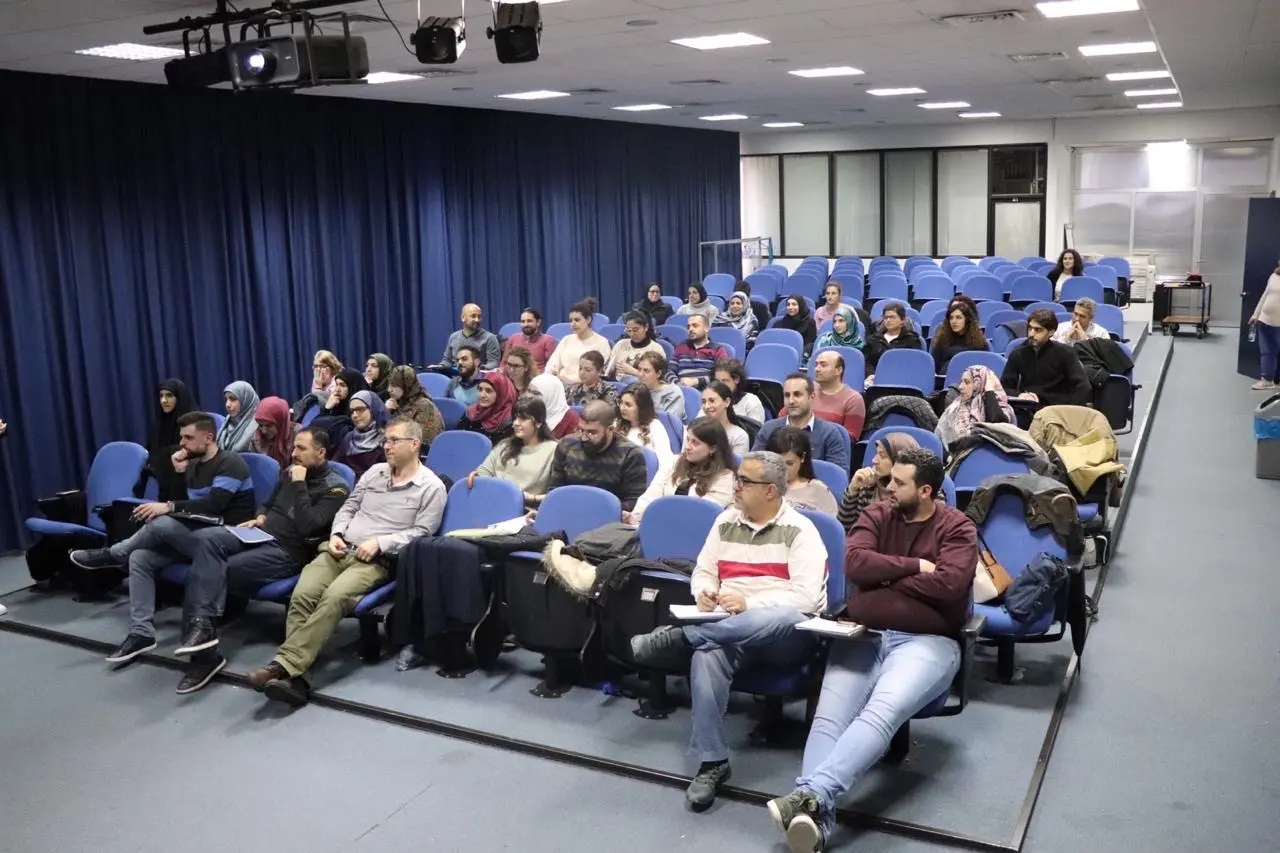
Are you a parent wanting to learn more? A physiotherapist wishing to train in the paediatric Postiaux method? An institution wanting to organise a tailor-made course? Contact us directly.
This page is for information only. For any medical question about your baby, consult your paediatrician or GP. In an emergency, call your country's emergency number (112 in Europe).
A gentle, scientific and deeply respectful approach to the infant. The Guy Postiaux method has transformed paediatric respiratory physiotherapy by replacing older techniques — clapping, postural drainage — with slow, passive expiratory techniques (ELPr) validated by scientific research. This is the method Stéphane Otto teaches to physiotherapists around the world.
The respiratory system of a newborn or young child is not a scaled-down version of an adult's. This is one of the fundamental insights of Guy Postiaux's work: the infant's ventilatory mechanics, airway geometry, respiratory muscle maturity and ability to cough all differ profoundly from those of an adult. Yet for decades, paediatric respiratory physiotherapy applied techniques designed for adults to babies: postural drainage, chest percussion (clapping), forced expirations. The results were limited at best and harmful at worst.
The new paradigm proposed by Guy Postiaux, and now taught by Stéphane Otto around the world, rests on a different logic: adapting the technique to the infant's real physiology. This means favouring slow expiratory techniques (ELPr — Prolonged Slow Expiration), passive, modulated manoeuvres synchronised with the baby's spontaneous breathing, always guided by lung auscultation. These gentle techniques respect the child and the family, and give the physiotherapist observable, measurable results.
This page offers a complete overview of infant respiratory physiotherapy: the anatomical specifics that justify it, the modern techniques that make it up, how a session unfolds, the indications and contraindications, the scientific evidence behind it, and the courses taught by Stéphane Otto to pass this method on to practising physiotherapists. Useful reading for parents with questions as well as for professionals wishing to learn more.
Understanding why infant respiratory physiotherapy cannot rely on the same techniques as for adults requires grasping a few essential features of the baby's anatomy and physiology.
The diameter of an infant's bronchi and bronchioles is far smaller than an adult's. A small amount of mucus can therefore cause significant obstruction.
A baby's chest is extremely flexible: the ribs are soft and the sternum mobile. Strong or percussive techniques are more likely to deform the rib cage than to drain secretions.
Infants under 3 months breathe almost exclusively through the nose. Nasal congestion alone can cause respiratory distress — hence the importance of nasal washing, the essential first step.
The expulsive force of a baby's cough is limited. This justifies the use of suitable airway clearance aids, including Provoked Cough (TP) according to Guy Postiaux.
Infants breathe mainly with the diaphragm. Every technique must take this into account, especially the direction and pressure applied to the abdomen during an expiratory manoeuvre.
GOR is very common in infants. Older techniques (postural drainage, percussion) encouraged it; modern techniques (ELPr) respect it.
The Postiaux method is above all a gesture — a precise touch, attentive listening, a respectful presence. Here are some images of this practice, as passed on by Stéphane Otto around the world.
The Postiaux method has profoundly renewed the paediatric physiotherapist's toolkit. Here are the main techniques used with babies — all gentle, slow, passive, modulated and guided by lung auscultation.
A passive, slow manoeuvre performed with gentle thoraco-abdominal pressure by the physiotherapist, synchronised with the baby's spontaneous expiration. It prolongs expiration from functional residual capacity towards residual volume, moving secretions from the distal to the proximal airways. Validated by oesophageal pressure measurement and published in Annales de Kinésithérapie.
A technique for the controlled increase of expiratory flow, adapted to infants in a slow, modulated form. It complements ELPr by helping secretions move towards the proximal airways. The rapid or forced AFE of older techniques has been replaced by this gentle, adapted version.
A baby cannot cough on demand. Provoked Cough involves triggering a cough through precisely calibrated laryngeal stimulation. It has been studied and validated in comparison with other expiratory techniques (ELPr, AFE), notably in a prospective study published by Postiaux's team on 19 hospitalised infants (2006).
A manual technique of gentle chest pressure, modulated and synchronised with the infant's spontaneous expiration. It follows the logic of the new paradigm: no percussion, no violent vibration, but continuous, physiological manual action.
Since infants breathe through the nose, nasal clearance is often the first step — and sometimes the only one needed. Saline solution, lying on the back or side, in-line technique. The physiotherapist teaches parents to repeat this at home.
Before and during each session, lung auscultation is the central act. It identifies the nature of the sounds (wheezes, rhonchi, crackles) and their location, and guides the choice of technique in real time. It is the cornerstone of the Postiaux method.
Research by Guy Postiaux and several international teams has shown that certain older techniques — long taught out of habit — are ineffective and have potentially harmful side effects in infants. These techniques no longer form part of practice under the new paradigm.
Tilting the child into different positions to make secretions "fall" by gravity. Shown to be ineffective in the vast majority of cases, and associated with an increased risk of gastro-oesophageal reflux in infants.
Rapid tapping on the chest with a cupped hand. No proven benefit on bronchial clearance; documented adverse effects: regurgitation, agitation, transient desaturation, rib fractures in extreme cases.
Manual or mechanical vibrations applied to the chest. Like clapping, these techniques have no solid scientific validation in infants and can cause discomfort and stress.
Rapid, strong chest pressures. Unsuited to infant ventilatory mechanics, they can worsen obstruction through dynamic collapse of the distal airways. Replaced by slow expirations (ELPr).
In November 2019, France's Haute Autorité de Santé published recommendations stating that airway clearance respiratory physiotherapy is no longer recommended as routine in the management of acute bronchiolitis in otherwise healthy infants. This update precisely reflects the conclusions of Postiaux's work: abandon conventional, unvalidated techniques. It does not rule out the potential value of modern techniques (ELPr) in certain specific clinical contexts, on medical indication.
A paediatric respiratory physiotherapy session using the Postiaux method lasts between 15 and 25 minutes. It follows a precise logic, from assessment to passing information on to parents.
The physiotherapist reviews the child's clinical history (medical prescription, past history, symptoms, feeding, sleep) and observes the baby: colour, breathing rate, any signs of difficulty, behaviour. This initial observation is already a clinical examination.
Using a suitable stethoscope, the physiotherapist listens to the respiratory sounds: presence or absence of adventitious sounds (wheezes, rhonchi, crackles), their location and how they change with breathing. This skill, taught in depth in Stéphane Otto's courses, is the cornerstone of the therapeutic decision.
Based on the assessment, the physiotherapist decides: is a session needed, or simply monitoring and support? If intervention is justified, which techniques should be chosen? The Postiaux method explicitly rejects systematic protocols: every baby has an assessment, and every assessment determines the treatment.
The first technical step with an infant: clearing the upper airways. Saline solution, suitable position, in-line technique. The physiotherapist guides parents and explains the gesture so that they can repeat it at home.
ELPr, sometimes combined with modulated slow AFE, is applied while respecting the baby's comfort. These are passive manoeuvres: no percussion, no violent vibration, no effort imposed on the child. The physiotherapist watches for signs of tolerance — a baby who becomes agitated, cries a lot or desaturates requires a pause.
If secretions have moved into the proximal airways and the child does not cough spontaneously, a Provoked Cough can be triggered to complete clearance. This technique remains precisely calibrated and is not systematic.
A new auscultation assesses the immediate effect of the session: have the adventitious sounds decreased? Has ventilation improved? This is the objective check that the Postiaux method has established as standard.
Hydration, smaller and more frequent feeds, sleeping position, nasal washing, warning signs to watch for. The session always ends with time for discussion and information. The paediatric respiratory physiotherapist is also a health educator.
The Postiaux method insists on the need for precise indications. Paediatric respiratory physiotherapy is never systematic: it always requires prior clinical assessment and a medical prescription.
This list is indicative and non-exhaustive. Any indication or contraindication must be validated by a doctor. If in doubt or if signs of worsening appear, contact a healthcare professional or the emergency services immediately.
Beyond the physiotherapy session, parents play a central role in the infant's respiratory comfort. Here are some simple, essential actions, often taught by physiotherapists trained in the Postiaux method.
With saline solution, several times a day, especially before feeds and bedtime. The essential action for a baby with a cold.
Offer drinks more often, in small amounts. Good hydration thins secretions and makes them easier to clear.
In countries where this is recommended, slightly raise the head of the cot (on paediatric advice). Sleeping on the back remains the rule for preventing sudden infant death.
Exposure to second-hand smoke significantly worsens infants' respiratory symptoms. Air rooms regularly and keep the home smoke-free.
Refusing to drink, breathing difficulty, excessive drowsiness, abnormal colour (cyanosis), extreme agitation — all signs requiring immediate medical attention.
The Postiaux method has always been rooted in Evidence Based Medicine. Here are some major scientific publications that mark the history of modern paediatric respiratory physiotherapy.
A pioneering study comparing ELPr, FET and Provoked Cough in infants by measuring oesophageal pressures — physiological proof of the slow, passive nature of the technique.
A longitudinal study showing a significant improvement in the Wang clinical score after sessions combining ELPr and Provoked Cough in infants hospitalised for moderate acute bronchiolitis (p<0.001).
The Cochrane review suggests that slow expiratory techniques have some validating evidence and show no harmful side effects, unlike conventional techniques — confirming positions defended by Guy Postiaux for three decades.
An exchange of objective arguments between Guy Postiaux (for validated slow expiratory techniques) and Prof. Jean-Christophe Dubus (sceptical), published in the Revue des Maladies Respiratoires. A major reference for understanding the current scientific debate.
HAS no longer recommends routine airway clearance physiotherapy for acute bronchiolitis in otherwise healthy infants. This position aligns with the abandonment of conventional techniques already advocated by Postiaux; it does not rule out the targeted use of slow expiratory techniques on specific medical indication.
Mastering modern paediatric respiratory physiotherapy techniques — ELPr, adapted AFE, TP, fine auscultation — requires specific training. Stéphane Otto, a physiotherapist who graduated from the University of Liège (ULiège) and a collaborator of Guy Postiaux, teaches this training in several countries: Belgium (SERK, AmiSEK), France (FC Santé, Alister, RKBE, AKCR, FKNL), Brazil (SIFR), Spain (UMH Alicante), Romania (Adia Academy), Lebanon (Lebanese University), Democratic Republic of the Congo (AAI humanitarian mission).
The courses combine pathophysiological foundations, practical lung auscultation workshops, clinical demonstrations and training in modulated techniques on manikins and in real clinical situations.
See all courses →
Are you a parent wanting to learn more? A physiotherapist wishing to train in the paediatric Postiaux method? An institution wanting to organise a tailor-made course? Contact us directly.
This page is for information only. For any medical question about your baby, consult your paediatrician or GP. In an emergency, call your country's emergency number (112 in Europe).
Join us and take it to the next level.