1968
Physiotherapy degree
Graduate of the Institut Provincial de Kinésithérapie (IPK), Montignies-sur-Sambre. Start of clinical work at the Centre Hospitalier Notre-Dame et Reine Fabiola.
The man who redefined modern respiratory physiotherapy: inventor of ELTGOL, ELPr and EDIC, founder of the new paradigm, researcher in stethacoustics and a leading figure in lung auscultation.
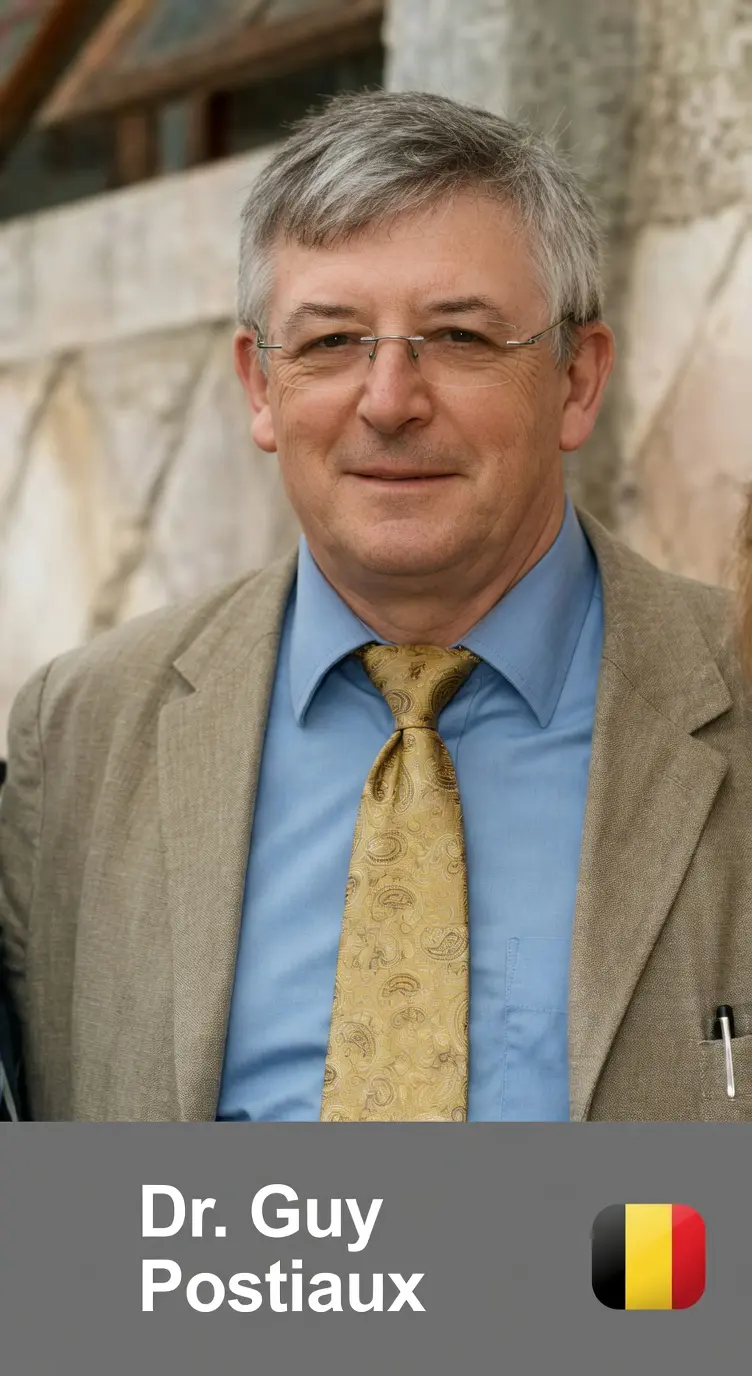
Guy Postiaux is one of the most striking figures in contemporary physiotherapy. Born and trained in Belgium, he graduated in physiotherapy from the Institut Provincial de Kinésithérapie de Montignies-sur-Sambre in 1968, then obtained the teaching aptitude certificate of the State Central Jury in 1983. Very early on, his attention turned to a clinical skill often neglected by physiotherapists of his time: lung auscultation. What many saw as a tool reserved for doctors became, thanks to him, the central instrument of a new physiotherapy — guided by the ear, founded on science and deeply respectful of the patient's physiology.
For several decades, Guy Postiaux practised and conducted his research at the Centre Hospitalier Notre-Dame et Reine Fabiola (CHNDRF) in Montignies-sur-Sambre, in the Charleroi region. He was head of the functional testing and respiratory sound analysis laboratories and of the respiratory physiotherapy department. Within the Groupe d'Étude Pluridisciplinaire Stéthacoustique, which he co-founded, he and Dr Emile Lens developed a research programme unique in Europe, devoted to the objective measurement of respiratory sounds and the experimental validation of physiotherapy techniques. From this patient, often thankless and sometimes solitary work came the method that now bears his name.
His influence soon crossed Belgian borders. He was invited to teach at René Descartes University — Paris V (1986–1991), then at the École de Cadres en Kinésithérapie Bois-Larris in France. In Spain, he was a visiting professor at Ramon Llull University in Barcelona (1995–2001) and at the Universidad ONCE in Madrid. In Brazil, he became a visiting professor at the Federal University of Minas Gerais in Belo Horizonte and the Federal University of Pernambuco in Recife. In Belgium, he taught at the Hautes Écoles Charleroi-Europe (1982–2003), the Haute École Léonard de Vinci, the Haute École Parnasse and the Haute École Condorcet, and was an Associate Lecturer at the Université Libre de Bruxelles (ULB) from 2004 to 2007.
His influence extends far beyond French-speaking physiotherapists. A full member of the Société Scientifique Belge de Kinésithérapie, an effective member of the Restricted Chamber of the INAMI medical control service, a founding member and secretary of the CHNDRF medical ethics committee, and founder and honorary member of the Société Européenne de Kinésithérapie Respiratoire et Cardio-Vasculaire, he has taken part in all the major bodies that structure the profession. He represented the Belgian Government to the Senate commission studying the professional status of physiotherapists in 1994, and sat on the National Technical Council for Physiotherapy.
Internationally, his scientific commitment is just as deep. He is a member of the International Lung Sounds Association (ILSA), the American Association for Respiratory Care, the Société Belge de Pneumologie and the European Respiratory Society Task Force on Lung Sounds Nomenclature Survey. A member of the CORSA Group — Computerized Recording and Analysis of Respiratory Sounds, he served as a research expert under the European Communities' Biomedical and Health Research Programme (BIOMED 1) from 1994 to 1999. This involvement makes him one of the major contributors to European recommendations on the nomenclature and standardised analysis of respiratory sounds.
His work was recognised early. In 1991, his book Kinésithérapie respiratoire et auscultation pulmonaire received the prestigious "Kiné à la Main d'Or" Trophy in Paris, on 12 October 1991. This book, followed by La kinésithérapie respiratoire de l'enfant (De Boeck Université, several editions, translated into Spanish and Brazilian Portuguese) and then the reference work Kinésithérapie et bruits respiratoires — nouveau paradigme (De Boeck Supérieur, 2016), now shapes the teaching of respiratory physiotherapy in most French-speaking schools and beyond.
Beyond these titles, what truly characterises Guy Postiaux's career is a constant refusal of "recipe-based" physiotherapy, scientific rigour applied to daily practice, and the deep conviction that every patient is a particular case, deserving a specific physiotherapy assessment and appropriate treatment. This philosophy — demanding, rigorous, deeply human — is precisely what Stéphane Otto now passes on to physiotherapists around the world.
More than half a century of teaching, research and scientific publications. Here are the key milestones in Guy Postiaux's career.
Graduate of the Institut Provincial de Kinésithérapie (IPK), Montignies-sur-Sambre. Start of clinical work at the Centre Hospitalier Notre-Dame et Reine Fabiola.
Organiser and President of the Second European Days of Respiratory and Cardiovascular Physiotherapy in Charleroi (6–8 May 1982). Start of teaching at the Hautes Écoles Charleroi-Europe.
Presentation of ELTGOL (total slow expiration with open glottis in the infralateral position) at the 4th European Days of Respiratory and Cardiovascular Physiotherapy in Stresa (Italy). Later published in Annales de Kinésithérapie with validation by videobronchography.
Kinésithérapie respiratoire et auscultation pulmonaire published by De Boeck Université (Brussels) and Éditions Universitaires (Paris).
Awarded in Paris on 12 October 1991 for his reference work on respiratory physiotherapy and lung auscultation.
Research expert in the CORSA Group (Computerized Respiratory Sound Analysis) under the European Communities' Biomedical and Health Research Programme. Contribution to European standards for respiratory sound analysis.
Teaching respiratory physiotherapy in Spain. European dissemination of the method and of guided auscultation.
Publication of Fisioterapia respiratoria en el niño by McGraw Hill Interamericana (Madrid), with a lung auscultation CD.
Fisioterapia Respiratoria Em Pediatria from Artmed Editora (Porto Alegre). 3rd edition of La kinésithérapie respiratoire de l'enfant from De Boeck Université. Visiting professor at the Federal University of Minas Gerais (Belo Horizonte, Brazil).
Université Libre de Bruxelles. Academic dissemination of the new paradigm in Belgian universities.
Publication of Kinésithérapie et bruits respiratoires — nouveau paradigme by De Boeck Supérieur (465 pp.): the synthesis of forty years of research. A physiotherapy that is "inspiratory, slow, resisted, positional, validated by stethacoustic, ultrasound and biochemical means".
Teaching of the Postiaux method is part of the official physiotherapy curriculum in Belgian and foreign schools and universities. Stéphane Otto, a collaborator of Guy Postiaux, disseminates it in Belgium, France, Brazil, Spain, Romania, Lebanon and the Democratic Republic of the Congo.
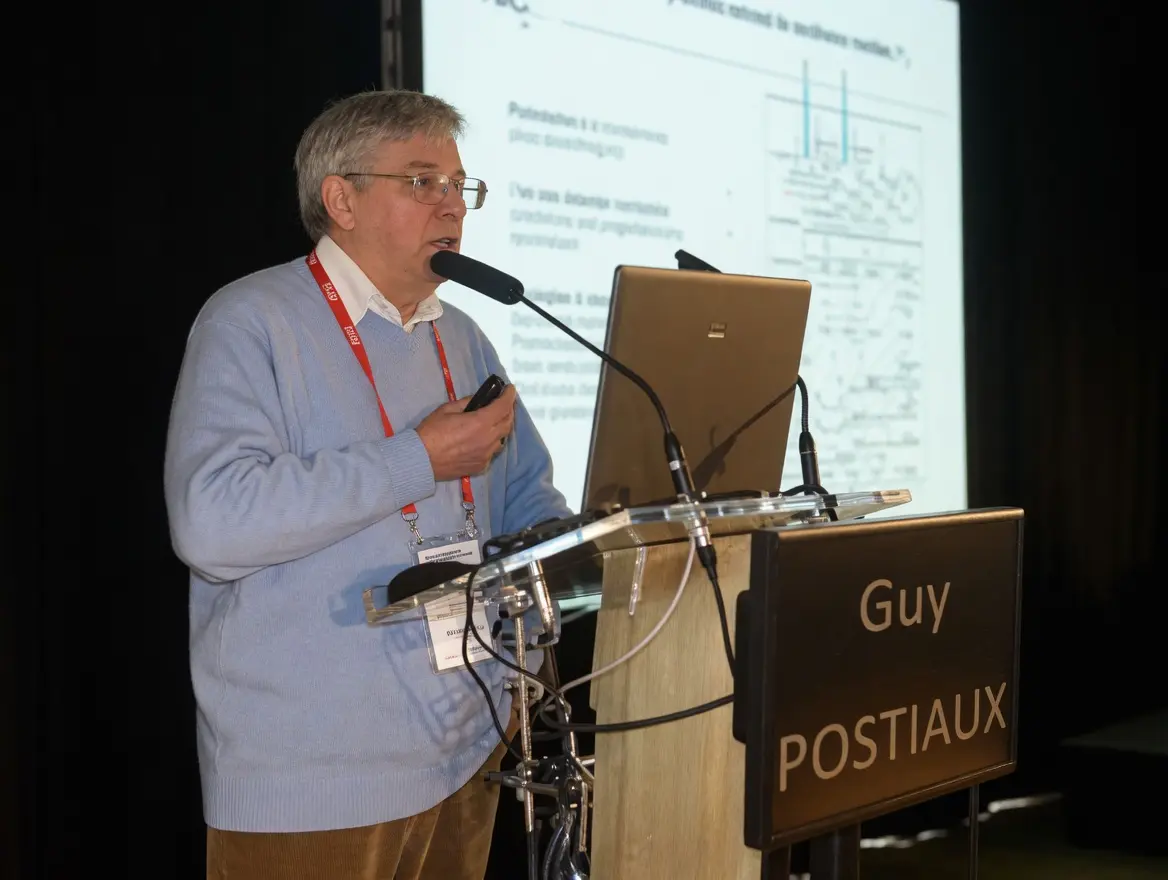
For decades, respiratory physiotherapy relied on conventional techniques — postural drainage, clapping, forced expirations — from an empirical tradition. Guy Postiaux showed that these techniques were often obsolete, ineffective or even potentially harmful in young children. In their place, he proposes an entirely new paradigm based on ventilatory mechanics, stethacoustics and Evidence Based Medicine.
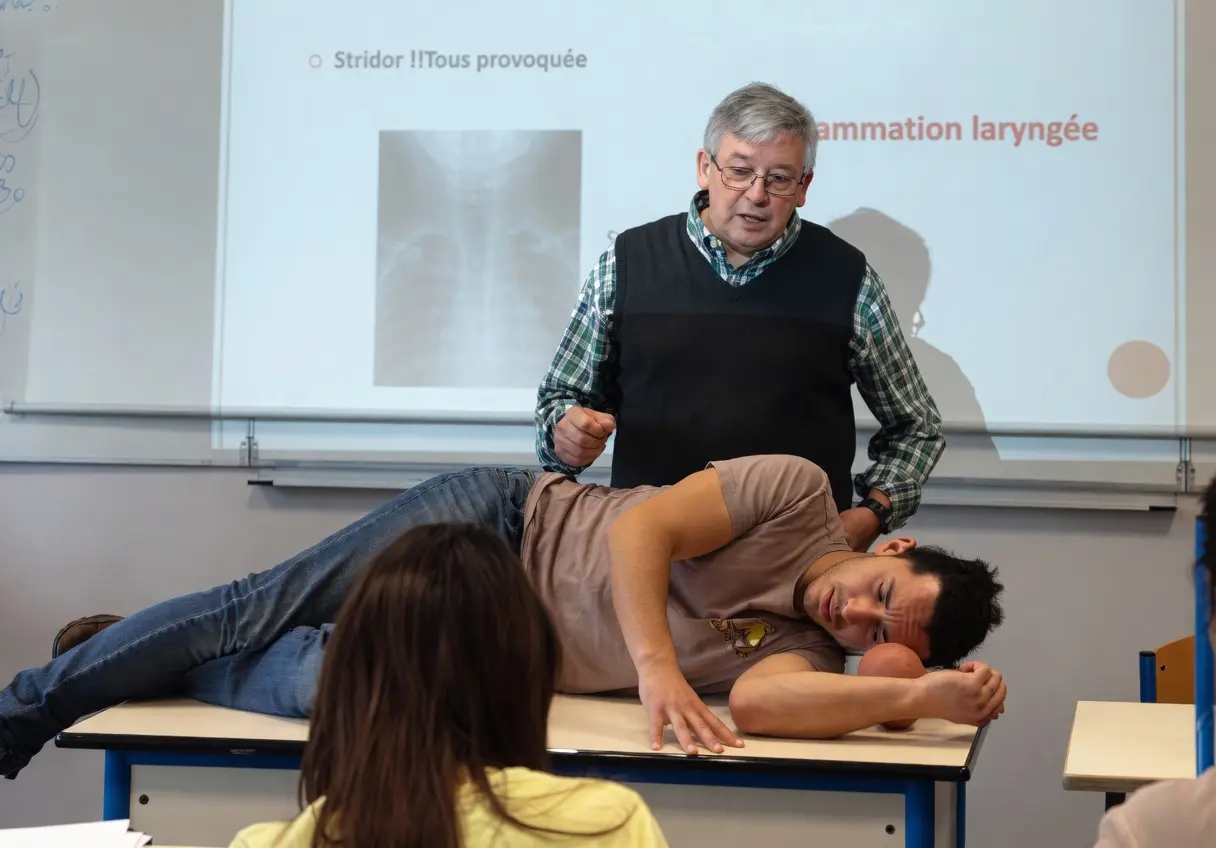
Based on his stethacoustic research and videobronchographic analysis, Guy Postiaux showed that postural drainage and clapping — pillars of Anglo-Saxon conventional chest physiotherapy — should be considered obsolete and ineffective, especially in infants and young children. These techniques, long taught out of habit, do not stand up to scientific scrutiny.
In their place, the method offers techniques that are more distal, gentler and better tolerated, adapted to the fine ventilatory mechanics of the lung. The aim is no longer global "bronchial hygiene" but targeted, controlled and measurable action based on respiratory sounds identified by auscultation.
Guy Postiaux invented a body of techniques that now form the foundation of modern respiratory physiotherapy, in adults and infants alike. All have been scientifically validated and published in the international literature.
Slow expiration with the mouth open, started at resting ventilatory level and continued to residual volume. The patient lies on the side, with the lung to be drained in the infralateral position. Validated by videobronchography, this technique preferentially clears the infralateral lung.
A slow, controlled and sustained inspiratory manoeuvre designed to move air beyond obstructed areas and recruit the deep lung. An essential complement to ELTGOL, EDIC belongs to the logic of inspiratory, resisted physiotherapy.
A slow, passive expiratory technique, performed with rigour in infants and young children. Validated by oesophageal pressure measurements and published in Annales de Kinésithérapie. It has become one of the reference techniques in the management of bronchiolitis and paediatric bronchopathies.
A manual technique of gentle chest pressure, modulated and synchronised with the infant's spontaneous expiration. Designed to optimise the movement of secretions towards the proximal airways without forced expirations.
A manoeuvre designed to promote airway clearance in infants by modulating intrathoracic pressure. Part of the range of modern techniques adapted to the anatomical and functional specifics of young children.
A technique for provoking a cough in infants unable to cough on demand, through precisely calibrated laryngeal stimulation. Studied and validated in comparison with other expiratory techniques.
In collaboration with Dr Emile Lens, Guy Postiaux invented a process for the automatic measurement of wheezes, night-time apnoeas and snoring: the ELENS-DSA Respiratory Sounds Analyser®. This pioneering tool made it possible to monitor adventitious sounds objectively and gave physiotherapists a true instrument of therapeutic control. It reflects a characteristic approach: never settling for a subjective impression, always seeking the measurement.
For Guy Postiaux, auscultation is not an accessory examination: it is the fundamental clinical act of the respiratory physiotherapist. His stethacoustic research, conducted within the CORSA Group and ILSA, helped to simplify the nomenclature of respiratory sounds and define objective stethacoustic parameters.
At the Journées Internationales de Kinésithérapie Instrumentale (Lyon, November 2000), auscultation was officially recognised as the clinical method of choice for identifying bronchial obstruction. This result owes much to the work of Guy Postiaux and his team.
His new nomenclature of respiratory sounds, proposed with Dr Emile Lens, precisely distinguishes normal sounds, continuous adventitious sounds (wheezes, rhonchi) and discontinuous ones (fine and coarse crackles), as well as paediatric stethacoustic specifics. This classification was adopted in the European standards published in the European Respiratory Review.
It is this fine, validated, scientific listening that Stéphane Otto teaches to physiotherapists around the world — patient, rigorous and always linked to precise clinical reasoning.
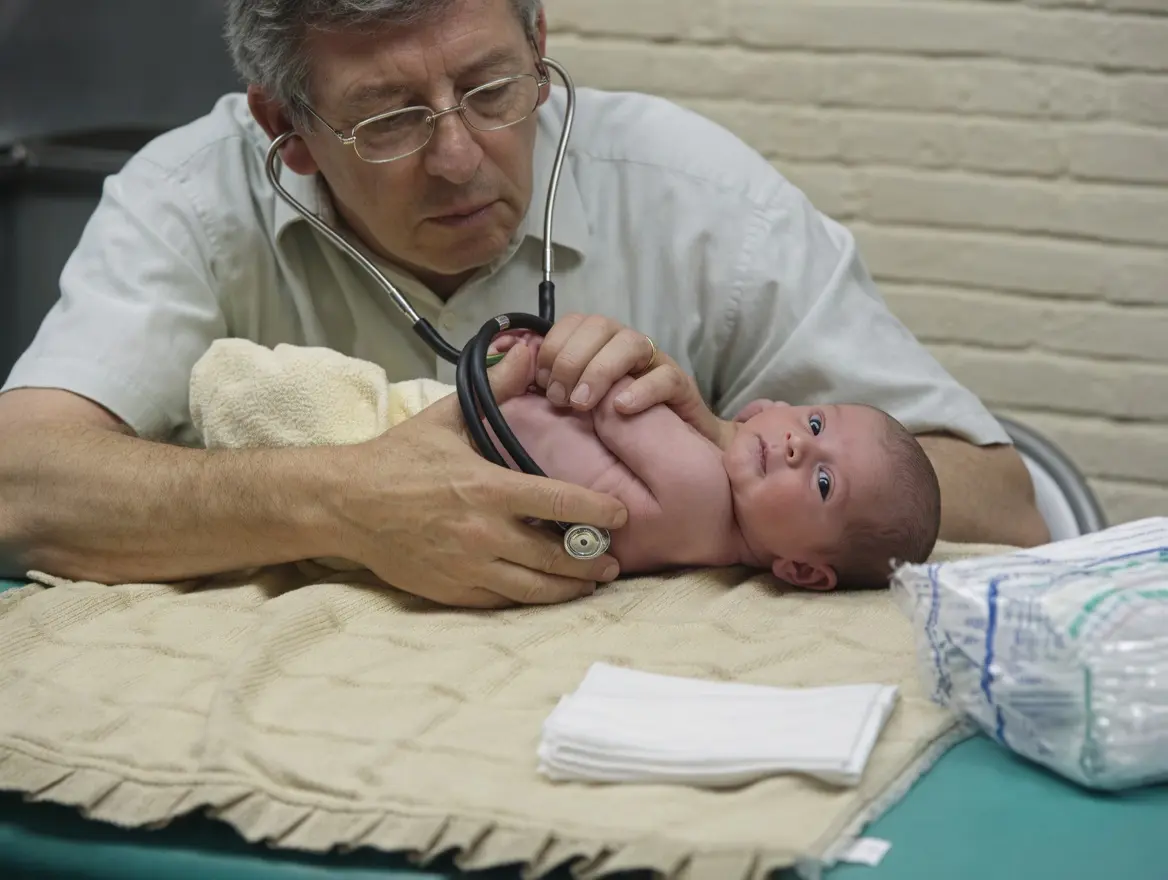
At the heart of the Postiaux method lies a conceptual innovation: the specific physiotherapy assessment. Where traditional respiratory physiotherapy was organised according to a nosological classification — based on the medical diagnosis (bronchiolitis, cystic fibrosis, COPD, etc.) — Guy Postiaux proposes a functional and anatomical approach. The physiotherapist no longer acts according to a diagnostic label, but according to what he or she observes and hears in the patient.
This assessment rests on three pillars: systematic lung auscultation, evaluation of ventilatory mechanics and analysis of the location of the obstruction according to a tiered concept of the bronchopulmonary tree. From this analysis, the therapist selects the appropriate technique — proximal, middle or peripheral — and adapts it case by case.
This deeply personalised approach explicitly rejects the logic of "recipes": there is no single protocol for all cases of bronchiolitis, nor a fixed sequence for all COPD. Every patient deserves an assessment, and every assessment determines the treatment. This clinical rigour is what makes the difference between technical physiotherapy and medical physiotherapy.
The specific physiotherapy assessment is now the main content of the courses taught by Stéphane Otto around the world. It is taught not as a protocol but as structured clinical reasoning that each physiotherapist learns to integrate into daily practice, in private practice as well as in hospital.
More than four decades of scientific writing, teaching manuals and international publications. Guy Postiaux's books are now references at physiotherapy universities in Europe and Latin America.
The first French-language reference work on lung auscultation in physiotherapy. Awarded the "Kiné à la Main d'Or" Trophy in Paris in 1991.
Reference work on paediatric respiratory physiotherapy. Care techniques guided by lung auscultation. Several editions, translated into Spanish and Brazilian Portuguese.
Spanish edition on paediatric respiratory physiotherapy. Spreads the method throughout Spanish-speaking Latin America and Spain.
Brazilian edition, now a reference at Brazil's federal universities. It reflects the method's influence in South America.
Co-author of a reference work on dysphagia, extending respiratory physiotherapy to the ENT and swallowing sphere.
Co-author of a collective reference work on cardiorespiratory physiotherapy. Brazilian academic dissemination of the new paradigm.
The masterly synthesis of forty years of research, teaching and clinical practice. This book proposes a new paradigm for respiratory physiotherapy — "inspiratory, slow, resisted, positional, validated by stethacoustic, ultrasound and biochemical means" — based on the spatial geometry of the lung. It challenges conventional techniques in adults and young children alike and opens up a vast field of research. It is now the reference manual taught in the courses given by Stéphane Otto.
In addition to these books, there are numerous articles in Annales de Kinésithérapie, Revue des Maladies Respiratoires, Pediatric Pulmonology, Respiratory Care and European Respiratory Review, as well as papers at the main international congresses on respiratory physiotherapy and pulmonology.
Over the decades, Guy Postiaux has sat on the main learned societies, research groups and advisory bodies that structure respiratory physiotherapy in Europe and worldwide.
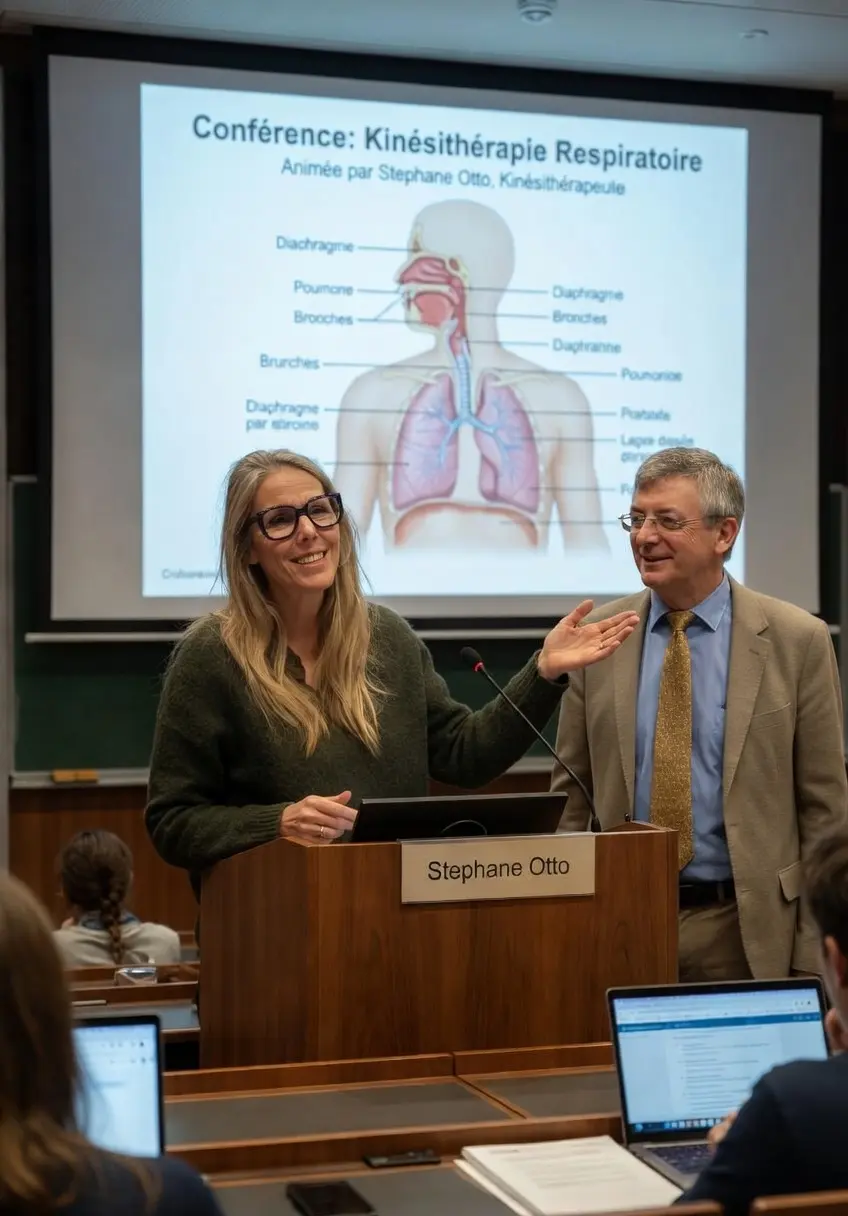
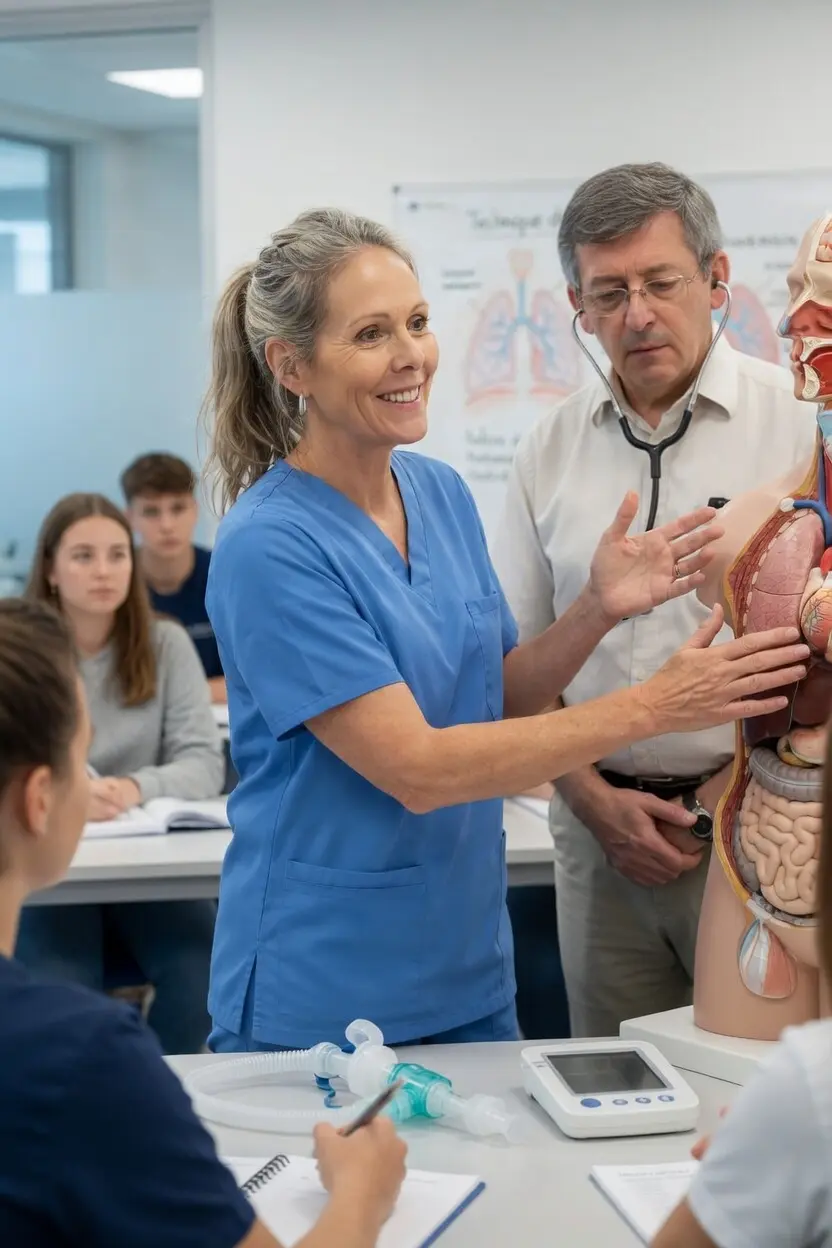
The work of Guy Postiaux would not be what it is today without patient, demanding teaching that is deeply faithful to his principles. Stéphane Otto, a physiotherapist who graduated from the University of Liège (ULiège), has devoted her career to this. As a collaborator and trainer, she teaches respiratory physiotherapy courses in the Postiaux method around the world — Belgium, France, Brazil, Spain, Romania, Lebanon and the Democratic Republic of the Congo.
Her teaching respects the spirit of the method: no recipes, constant clinical rigour, structured reasoning and the central place of auscultation. Through her, a school, a way of thinking and an ethic of respiratory care continue to reach new generations of physiotherapists.
Discover the courses →
Respiratory physiotherapy courses in the Guy Postiaux method, taught by Stéphane Otto, are organised in several countries. For dates, registration details or to organise a session at your institution, contact us.
The man who redefined modern respiratory physiotherapy: inventor of ELTGOL, ELPr and EDIC, founder of the new paradigm, researcher in stethacoustics and a leading figure in lung auscultation.
Guy Postiaux is one of the most striking figures in contemporary physiotherapy. Born and trained in Belgium, he graduated in physiotherapy from the Institut Provincial de Kinésithérapie de Montignies-sur-Sambre in 1968, then obtained the teaching aptitude certificate of the State Central Jury in 1983. Very early on, his attention turned to a clinical skill often neglected by physiotherapists of his time: lung auscultation. What many saw as a tool reserved for doctors became, thanks to him, the central instrument of a new physiotherapy — guided by the ear, founded on science and deeply respectful of the patient's physiology.
For several decades, Guy Postiaux practised and conducted his research at the Centre Hospitalier Notre-Dame et Reine Fabiola (CHNDRF) in Montignies-sur-Sambre, in the Charleroi region. He was head of the functional testing and respiratory sound analysis laboratories and of the respiratory physiotherapy department. Within the Groupe d'Étude Pluridisciplinaire Stéthacoustique, which he co-founded, he and Dr Emile Lens developed a research programme unique in Europe, devoted to the objective measurement of respiratory sounds and the experimental validation of physiotherapy techniques. From this patient, often thankless and sometimes solitary work came the method that now bears his name.
His influence soon crossed Belgian borders. He was invited to teach at René Descartes University — Paris V (1986–1991), then at the École de Cadres en Kinésithérapie Bois-Larris in France. In Spain, he was a visiting professor at Ramon Llull University in Barcelona (1995–2001) and at the Universidad ONCE in Madrid. In Brazil, he became a visiting professor at the Federal University of Minas Gerais in Belo Horizonte and the Federal University of Pernambuco in Recife. In Belgium, he taught at the Hautes Écoles Charleroi-Europe (1982–2003), the Haute École Léonard de Vinci, the Haute École Parnasse and the Haute École Condorcet, and was an Associate Lecturer at the Université Libre de Bruxelles (ULB) from 2004 to 2007.
His influence extends far beyond French-speaking physiotherapists. A full member of the Société Scientifique Belge de Kinésithérapie, an effective member of the Restricted Chamber of the INAMI medical control service, a founding member and secretary of the CHNDRF medical ethics committee, and founder and honorary member of the Société Européenne de Kinésithérapie Respiratoire et Cardio-Vasculaire, he has taken part in all the major bodies that structure the profession. He represented the Belgian Government to the Senate commission studying the professional status of physiotherapists in 1994, and sat on the National Technical Council for Physiotherapy.
Internationally, his scientific commitment is just as deep. He is a member of the International Lung Sounds Association (ILSA), the American Association for Respiratory Care, the Société Belge de Pneumologie and the European Respiratory Society Task Force on Lung Sounds Nomenclature Survey. A member of the CORSA Group — Computerized Recording and Analysis of Respiratory Sounds, he served as a research expert under the European Communities' Biomedical and Health Research Programme (BIOMED 1) from 1994 to 1999. This involvement makes him one of the major contributors to European recommendations on the nomenclature and standardised analysis of respiratory sounds.
His work was recognised early. In 1991, his book Kinésithérapie respiratoire et auscultation pulmonaire received the prestigious "Kiné à la Main d'Or" Trophy in Paris, on 12 October 1991. This book, followed by La kinésithérapie respiratoire de l'enfant (De Boeck Université, several editions, translated into Spanish and Brazilian Portuguese) and then the reference work Kinésithérapie et bruits respiratoires — nouveau paradigme (De Boeck Supérieur, 2016), now shapes the teaching of respiratory physiotherapy in most French-speaking schools and beyond.
Beyond these titles, what truly characterises Guy Postiaux's career is a constant refusal of "recipe-based" physiotherapy, scientific rigour applied to daily practice, and the deep conviction that every patient is a particular case, deserving a specific physiotherapy assessment and appropriate treatment. This philosophy — demanding, rigorous, deeply human — is precisely what Stéphane Otto now passes on to physiotherapists around the world.
More than half a century of teaching, research and scientific publications. Here are the key milestones in Guy Postiaux's career.
Graduate of the Institut Provincial de Kinésithérapie (IPK), Montignies-sur-Sambre. Start of clinical work at the Centre Hospitalier Notre-Dame et Reine Fabiola.
Organiser and President of the Second European Days of Respiratory and Cardiovascular Physiotherapy in Charleroi (6–8 May 1982). Start of teaching at the Hautes Écoles Charleroi-Europe.
Presentation of ELTGOL (total slow expiration with open glottis in the infralateral position) at the 4th European Days of Respiratory and Cardiovascular Physiotherapy in Stresa (Italy). Later published in Annales de Kinésithérapie with validation by videobronchography.
Kinésithérapie respiratoire et auscultation pulmonaire published by De Boeck Université (Brussels) and Éditions Universitaires (Paris).
Awarded in Paris on 12 October 1991 for his reference work on respiratory physiotherapy and lung auscultation.
Research expert in the CORSA Group (Computerized Respiratory Sound Analysis) under the European Communities' Biomedical and Health Research Programme. Contribution to European standards for respiratory sound analysis.
Teaching respiratory physiotherapy in Spain. European dissemination of the method and of guided auscultation.
Publication of Fisioterapia respiratoria en el niño by McGraw Hill Interamericana (Madrid), with a lung auscultation CD.
Fisioterapia Respiratoria Em Pediatria from Artmed Editora (Porto Alegre). 3rd edition of La kinésithérapie respiratoire de l'enfant from De Boeck Université. Visiting professor at the Federal University of Minas Gerais (Belo Horizonte, Brazil).
Université Libre de Bruxelles. Academic dissemination of the new paradigm in Belgian universities.
Publication of Kinésithérapie et bruits respiratoires — nouveau paradigme by De Boeck Supérieur (465 pp.): the synthesis of forty years of research. A physiotherapy that is "inspiratory, slow, resisted, positional, validated by stethacoustic, ultrasound and biochemical means".
Teaching of the Postiaux method is part of the official physiotherapy curriculum in Belgian and foreign schools and universities. Stéphane Otto, a collaborator of Guy Postiaux, disseminates it in Belgium, France, Brazil, Spain, Romania, Lebanon and the Democratic Republic of the Congo.
For decades, respiratory physiotherapy relied on conventional techniques — postural drainage, clapping, forced expirations — from an empirical tradition. Guy Postiaux showed that these techniques were often obsolete, ineffective or even potentially harmful in young children. In their place, he proposes an entirely new paradigm based on ventilatory mechanics, stethacoustics and Evidence Based Medicine.
Based on his stethacoustic research and videobronchographic analysis, Guy Postiaux showed that postural drainage and clapping — pillars of Anglo-Saxon conventional chest physiotherapy — should be considered obsolete and ineffective, especially in infants and young children. These techniques, long taught out of habit, do not stand up to scientific scrutiny.
In their place, the method offers techniques that are more distal, gentler and better tolerated, adapted to the fine ventilatory mechanics of the lung. The aim is no longer global "bronchial hygiene" but targeted, controlled and measurable action based on respiratory sounds identified by auscultation.
Guy Postiaux invented a body of techniques that now form the foundation of modern respiratory physiotherapy, in adults and infants alike. All have been scientifically validated and published in the international literature.
Slow expiration with the mouth open, started at resting ventilatory level and continued to residual volume. The patient lies on the side, with the lung to be drained in the infralateral position. Validated by videobronchography, this technique preferentially clears the infralateral lung.
A slow, controlled and sustained inspiratory manoeuvre designed to move air beyond obstructed areas and recruit the deep lung. An essential complement to ELTGOL, EDIC belongs to the logic of inspiratory, resisted physiotherapy.
A slow, passive expiratory technique, performed with rigour in infants and young children. Validated by oesophageal pressure measurements and published in Annales de Kinésithérapie. It has become one of the reference techniques in the management of bronchiolitis and paediatric bronchopathies.
A manual technique of gentle chest pressure, modulated and synchronised with the infant's spontaneous expiration. Designed to optimise the movement of secretions towards the proximal airways without forced expirations.
A manoeuvre designed to promote airway clearance in infants by modulating intrathoracic pressure. Part of the range of modern techniques adapted to the anatomical and functional specifics of young children.
A technique for provoking a cough in infants unable to cough on demand, through precisely calibrated laryngeal stimulation. Studied and validated in comparison with other expiratory techniques.
In collaboration with Dr Emile Lens, Guy Postiaux invented a process for the automatic measurement of wheezes, night-time apnoeas and snoring: the ELENS-DSA Respiratory Sounds Analyser®. This pioneering tool made it possible to monitor adventitious sounds objectively and gave physiotherapists a true instrument of therapeutic control. It reflects a characteristic approach: never settling for a subjective impression, always seeking the measurement.
For Guy Postiaux, auscultation is not an accessory examination: it is the fundamental clinical act of the respiratory physiotherapist. His stethacoustic research, conducted within the CORSA Group and ILSA, helped to simplify the nomenclature of respiratory sounds and define objective stethacoustic parameters.
At the Journées Internationales de Kinésithérapie Instrumentale (Lyon, November 2000), auscultation was officially recognised as the clinical method of choice for identifying bronchial obstruction. This result owes much to the work of Guy Postiaux and his team.
His new nomenclature of respiratory sounds, proposed with Dr Emile Lens, precisely distinguishes normal sounds, continuous adventitious sounds (wheezes, rhonchi) and discontinuous ones (fine and coarse crackles), as well as paediatric stethacoustic specifics. This classification was adopted in the European standards published in the European Respiratory Review.
It is this fine, validated, scientific listening that Stéphane Otto teaches to physiotherapists around the world — patient, rigorous and always linked to precise clinical reasoning.
At the heart of the Postiaux method lies a conceptual innovation: the specific physiotherapy assessment. Where traditional respiratory physiotherapy was organised according to a nosological classification — based on the medical diagnosis (bronchiolitis, cystic fibrosis, COPD, etc.) — Guy Postiaux proposes a functional and anatomical approach. The physiotherapist no longer acts according to a diagnostic label, but according to what he or she observes and hears in the patient.
This assessment rests on three pillars: systematic lung auscultation, evaluation of ventilatory mechanics and analysis of the location of the obstruction according to a tiered concept of the bronchopulmonary tree. From this analysis, the therapist selects the appropriate technique — proximal, middle or peripheral — and adapts it case by case.
This deeply personalised approach explicitly rejects the logic of "recipes": there is no single protocol for all cases of bronchiolitis, nor a fixed sequence for all COPD. Every patient deserves an assessment, and every assessment determines the treatment. This clinical rigour is what makes the difference between technical physiotherapy and medical physiotherapy.
The specific physiotherapy assessment is now the main content of the courses taught by Stéphane Otto around the world. It is taught not as a protocol but as structured clinical reasoning that each physiotherapist learns to integrate into daily practice, in private practice as well as in hospital.
More than four decades of scientific writing, teaching manuals and international publications. Guy Postiaux's books are now references at physiotherapy universities in Europe and Latin America.
The first French-language reference work on lung auscultation in physiotherapy. Awarded the "Kiné à la Main d'Or" Trophy in Paris in 1991.
Reference work on paediatric respiratory physiotherapy. Care techniques guided by lung auscultation. Several editions, translated into Spanish and Brazilian Portuguese.
Spanish edition on paediatric respiratory physiotherapy. Spreads the method throughout Spanish-speaking Latin America and Spain.
Brazilian edition, now a reference at Brazil's federal universities. It reflects the method's influence in South America.
Co-author of a reference work on dysphagia, extending respiratory physiotherapy to the ENT and swallowing sphere.
Co-author of a collective reference work on cardiorespiratory physiotherapy. Brazilian academic dissemination of the new paradigm.
The masterly synthesis of forty years of research, teaching and clinical practice. This book proposes a new paradigm for respiratory physiotherapy — "inspiratory, slow, resisted, positional, validated by stethacoustic, ultrasound and biochemical means" — based on the spatial geometry of the lung. It challenges conventional techniques in adults and young children alike and opens up a vast field of research. It is now the reference manual taught in the courses given by Stéphane Otto.
In addition to these books, there are numerous articles in Annales de Kinésithérapie, Revue des Maladies Respiratoires, Pediatric Pulmonology, Respiratory Care and European Respiratory Review, as well as papers at the main international congresses on respiratory physiotherapy and pulmonology.
Over the decades, Guy Postiaux has sat on the main learned societies, research groups and advisory bodies that structure respiratory physiotherapy in Europe and worldwide.
The work of Guy Postiaux would not be what it is today without patient, demanding teaching that is deeply faithful to his principles. Stéphane Otto, a physiotherapist who graduated from the University of Liège (ULiège), has devoted her career to this. As a collaborator and trainer, she teaches respiratory physiotherapy courses in the Postiaux method around the world — Belgium, France, Brazil, Spain, Romania, Lebanon and the Democratic Republic of the Congo.
Her teaching respects the spirit of the method: no recipes, constant clinical rigour, structured reasoning and the central place of auscultation. Through her, a school, a way of thinking and an ethic of respiratory care continue to reach new generations of physiotherapists.
Discover the courses →
Respiratory physiotherapy courses in the Guy Postiaux method, taught by Stéphane Otto, are organised in several countries. For dates, registration details or to organise a session at your institution, contact us.
Join us and take it to the next level.